
Women’s football is going from strength to strength – and when it comes to supporter culture, Arsenal are leading from the front.
From packed-out Emirates fixtures to away days across the country and continent, Gooners are showing up in numbers wherever they go. But it’s not just about where they go, it’s about why they go.
For this fanbase, and women’s football supporters more broadly, it’s about more than the game itself. From Women’s Super League away days to Champions League trips to Europe, they’re relishing the community, connection and culture that comes with it.
As that culture continues to grow, so too does the opportunity to create more of those moments that bring people together. Through its roots in connection and shared experiences, Guinness is playing a role in that – helping to build the social spaces that can turn women’s football matchdays into something more.
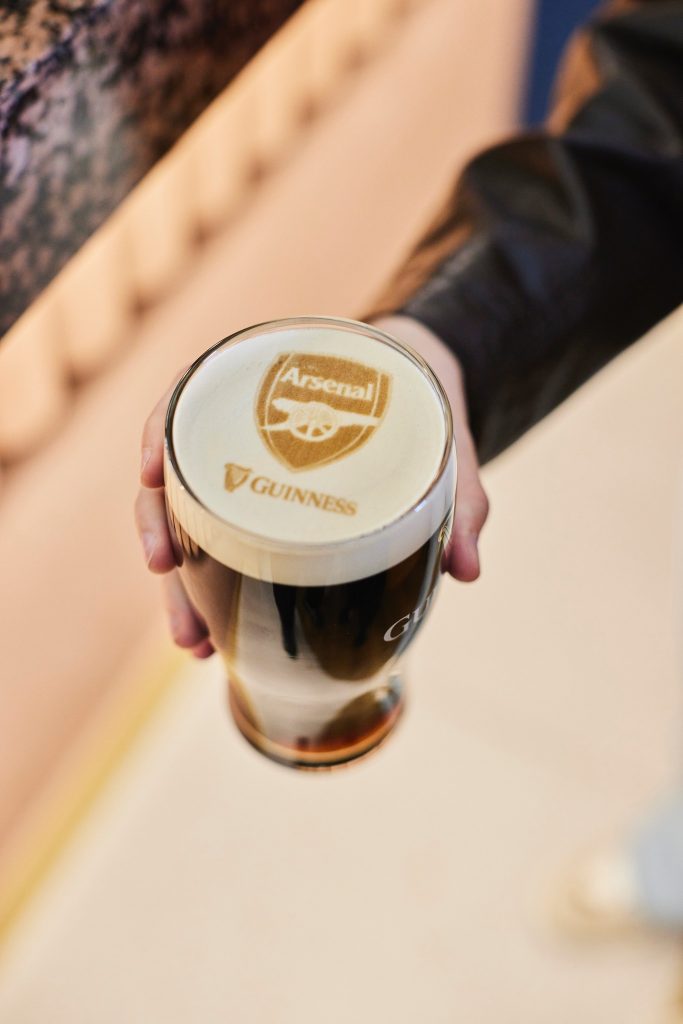
We caught up with Arsenal supporters ahead of their clash at Aston Villa – a match that secured them Champions League football for next season – to find out what keeps them coming back.
“I was hooked instantly”
For many, the journey into women’s football starts with a moment, but quickly turns into something more.
“I went to the Euros at Wembley and I was hooked,” one fan tells us. “I knew I had to have a team and be in the stadium making noise. It took me one game at Meadow Park and I’ve never looked back – I went home and bought every ticket for the rest of the season.”
Others found their way in years before women’s football found the mainstream.
“I first got into women’s football with the 1999 World Cup,” another says. “Then I moved to the UK and started following the WSL – now I travel over from the US for games.”
And sometimes, it only takes one player.
“I went to the 2017 Euros final and watched Vivianne Miedema score twice,” a supporter explains. “I found out she played for Arsenal… and here I am.”
“We’re building our own culture”
Across the fanbase, there’s a shared feeling that women’s football is different and something the whole ecosystem can play a part in shaping. Supporters and brands both play a huge role in building this culture beyond just showing up at the match, with Guinness inviting fans to co-create the culture around women’s football.
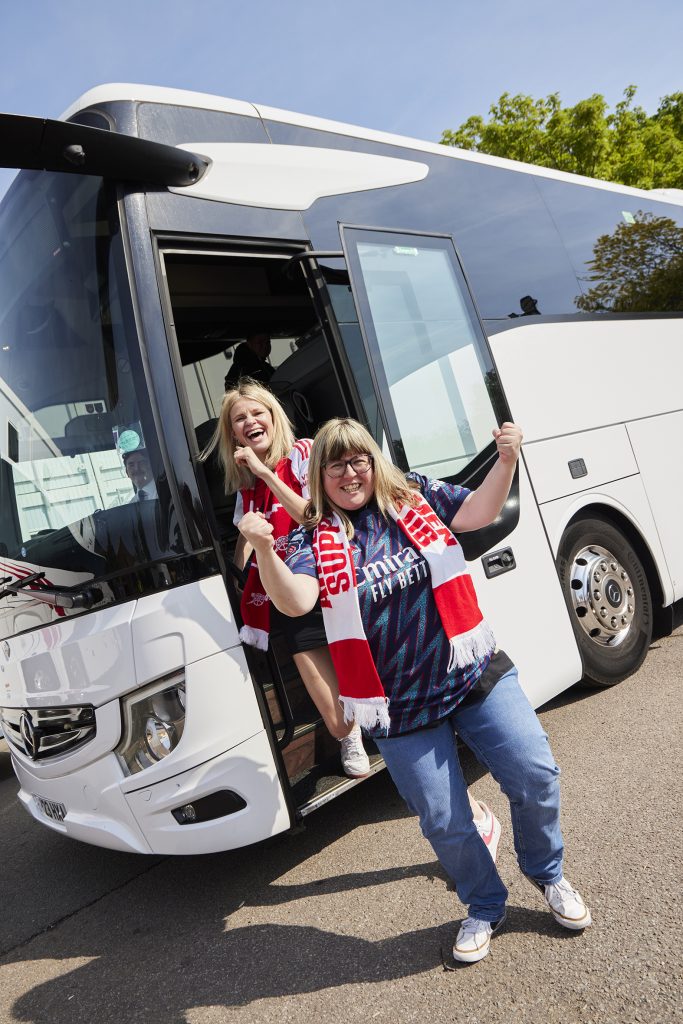
“We are building our own culture,” one supporter says. “The supporters club is amazing at bringing people together. It’s a friendly atmosphere, but we’re still making noise and making ourselves known.”
There’s a sense that women’s football doesn’t have to follow the blueprint of the men’s game, with this space a perfect opportunity for fresh ideas.
“We have the potential to build a new culture,” another adds. “Have our own individuality and not just follow what the men did. There’s the opportunity to have our own unique standpoint and I hope we do.”
And at the centre of it all is a feeling of inclusivity.
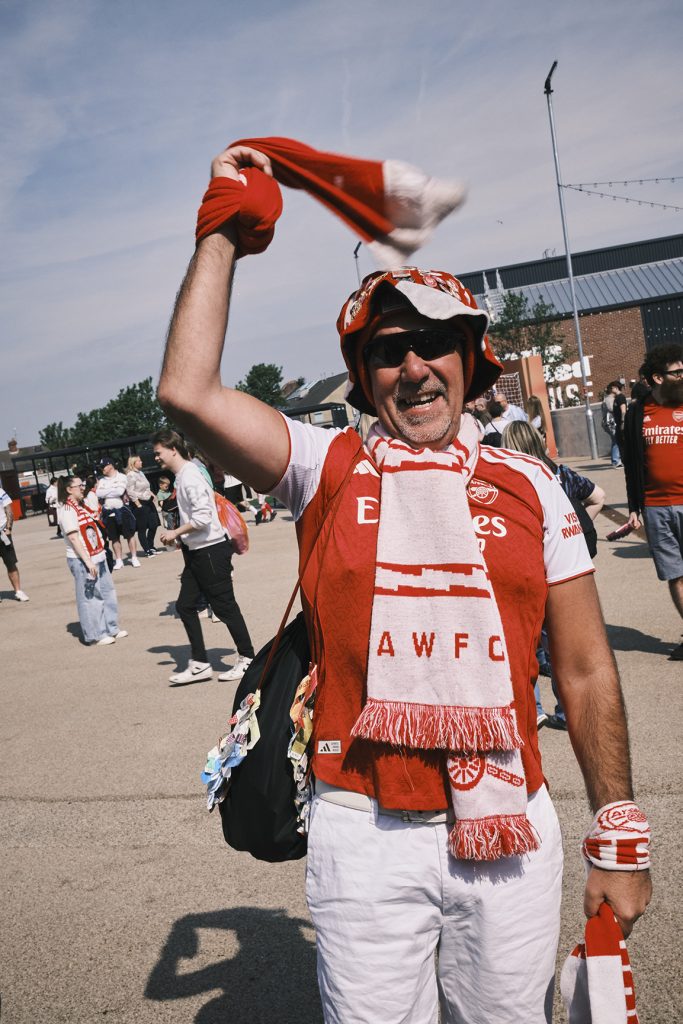
“I used to come to games on my own but now I know I’m going to see friendly faces at the pub before the match,” says one fan. “I’ll see 40 or 50 people I know when I turn up to an away game in another city or country.
“I love away games”
If there’s one thing that brings Arsenal fans together, it’s the away day experience.
“I love away games,” one supporter says. “It’s that nod in the airport when you see someone in an Arsenal hat, or the person on the train – you already know you’ve got something in common.”
“In places like Munich, Madrid or Lisbon, I know I will see people I know,” another explains. “There are always friendly faces and new friends to be made.”
And inside the stadium, everything and everyone comes together.
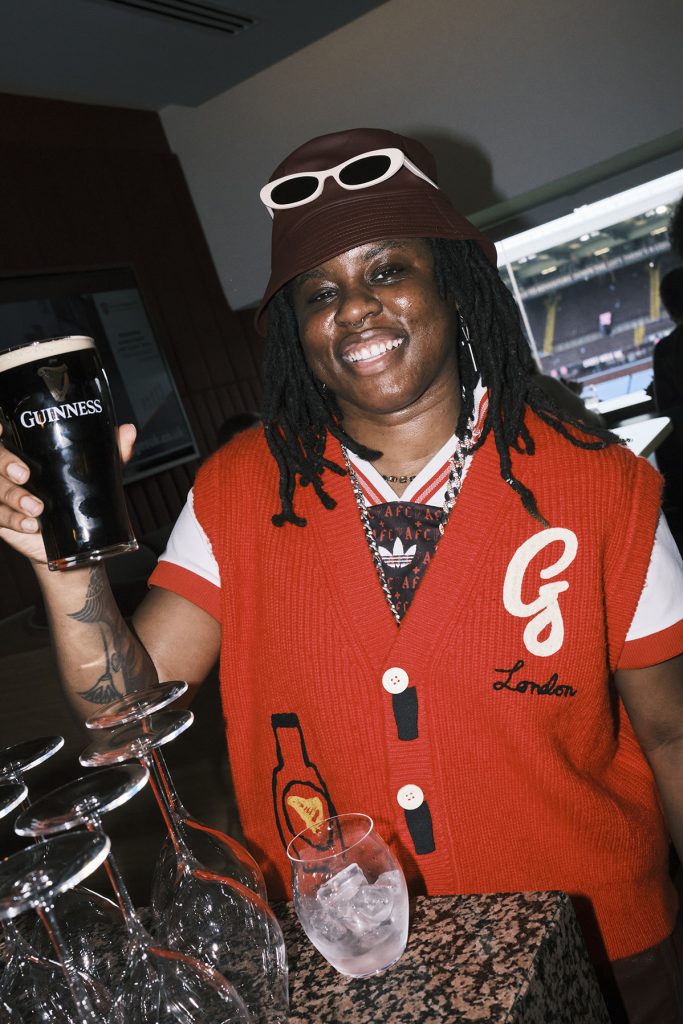
“For every away day, there’s almost equal numbers of home and away fans when Arsenal are playing,” says one fan.
“When we’re all chanting and reacting to the game, that’s when I feel most connected,” another says. “We just come together – bringing the noise and the vibes.”
Matchday rituals? A sausage roll!
Beyond the football itself, it’s the small traditions that make each matchday memorable for the fans.
“My favourite part of the day is just hanging out with my mates,” one fan says. “Win, lose or draw, we’re there for the atmosphere and the laughs.”
Others have their own away day routines.
“I need a morning coffee, a pre-match drink and then a sausage roll or similar on the way home,” one supporter laughs.
And sometimes, it’s the simple moments of connection that matter most. Guinness plays a meaningful role in this connection, for example by championing local pubs that create social spaces for fan communities to come together. In doing so, it helps shape the rituals that turn attendance into belonging, ultimately bringing more people towards women’s football.
“Rituals are meeting up in the local pubs at away games and meeting people from all over the world – that’s what really makes it special for me.”
The WSL’s “Fan Choice” pilot has this season given matchgoers at certain stadiums in the top two leagues the option to drink alcohol in the stands. Non-alcoholic beers, like Guinness 0.0, are opening the occasion up to more fans who may not want the alcoholic option.
“It’s like one big family”
At the heart of fan culture is something deeper than the football.
“I started going on my own,” one fan says. “Now I’ve made lifelong friends. It’s my social life as well as just coming to the games.”
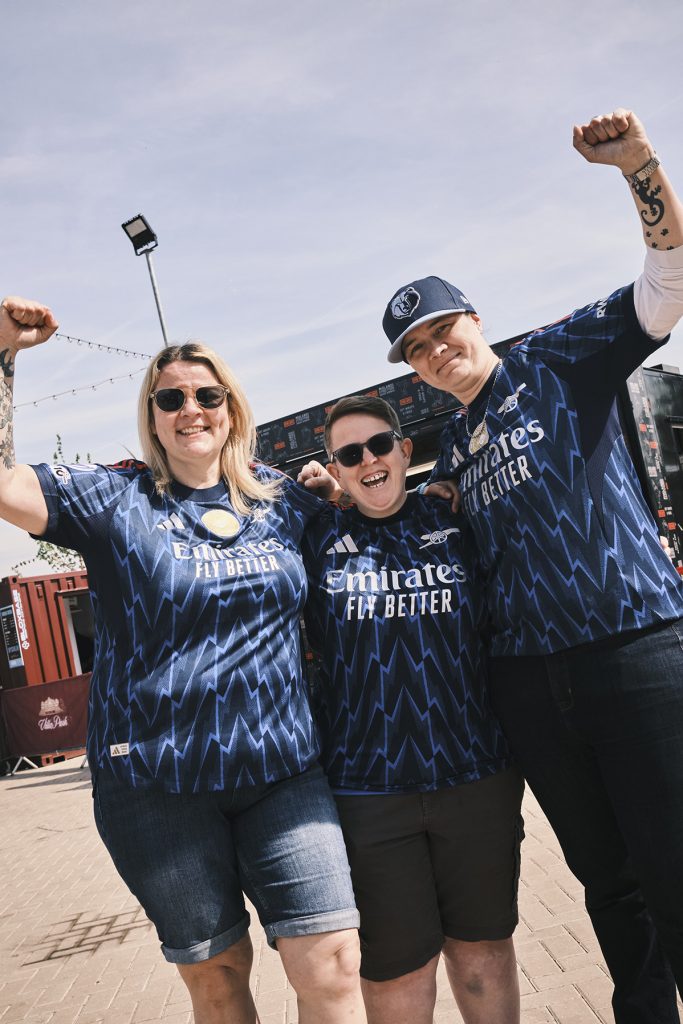
“The best thing about the Arsenal fan base is how welcoming everyone is,” another adds. “Just how it is like one big family.”
Or, as one supporter puts it: “We are absolute vibes. Win, lose or draw – it’s just the best time.”
Why more fans are joining
As women’s football grows, more fans are finding their way in – and staying.
“The Lionesses have been a big help,” one fan says.
“People are connecting to women’s football now that there’s a lot more visibility and it’s really accessible cost-wise and easier to get tickets,” another added.
And once they experience it, fans keep coming back.
“People are connecting with women’s football now because it’s being publicised,” another explains. “People see the quality and the inclusivity when they come to games – it’s an attractive product.
“It’s just a great atmosphere, great vibes and I love everyone that I hang out with!”
18+ | Please Drink Responsibly
The inaugural FIFA Women’s Champions Cup™ – the first tournament of its kind to bring together champion clubs from every continental confederation, has reached its closing stages. The competition will culminate on February 1 in London, as European champions Arsenal face South American champions SC Corinthians for the trophy at the Arsenal Stadium.
The Semi-Finals delivered drama and dominance in equal measure. Brazilian giants SC Corinthians secured a surprise 1–0 victory over NWSL title-holders Gotham FC, while Arsenal WFC produced a commanding 6–0 win against Morocco’s ASFAR Rabat to book their place in the final.
Based on those Semi-Final performances, She’s A Baller has selected a dream combined starting XI for the final – showcasing the standout talent from both SC Corinthians and Arsenal WFC ahead of a historic showdown.
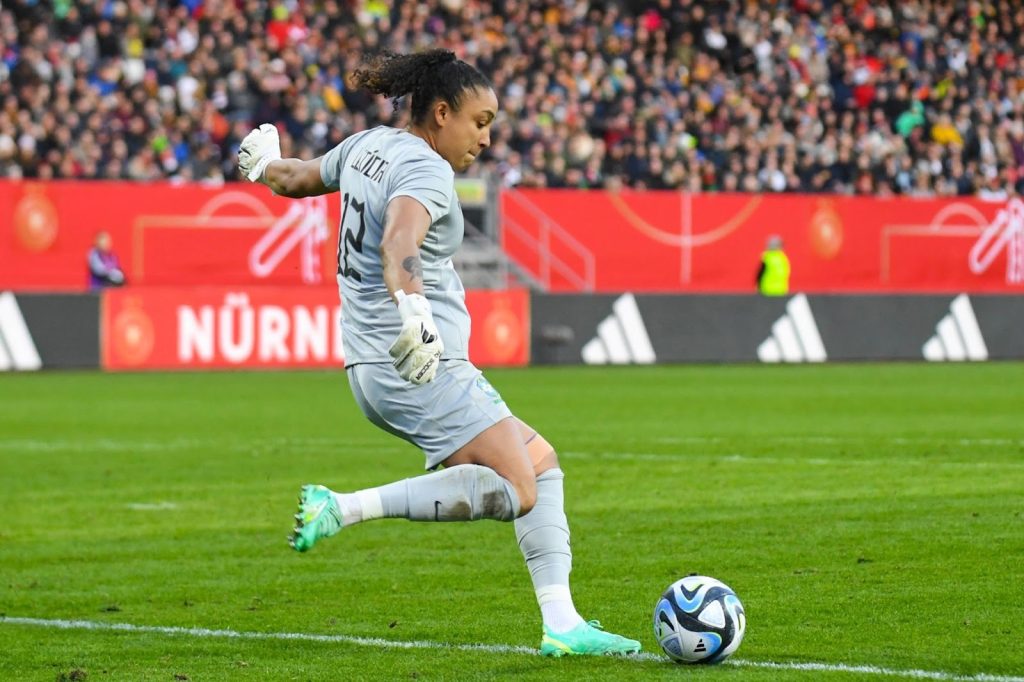
Goalkeeper – Letícia Izidoro Lima da Silva (SC Corinthians)
Often referred to as simply Lelê, the Brazilian shot-stopper is in her second spell for Corinthians after originally playing from 2016-2021 and rejoining in 2022. She pulled off a number of crucial saves to keep her side in the semi-final against the NWSL firm favourites and ensured Gotham’s goal scoring opportunities were kept to a minimum with her strong defensive line held in command. Her sharp eye for the ball along with plentiful experience will ensure that any opponent who aims to find the back of the net will embark on no easy feat.
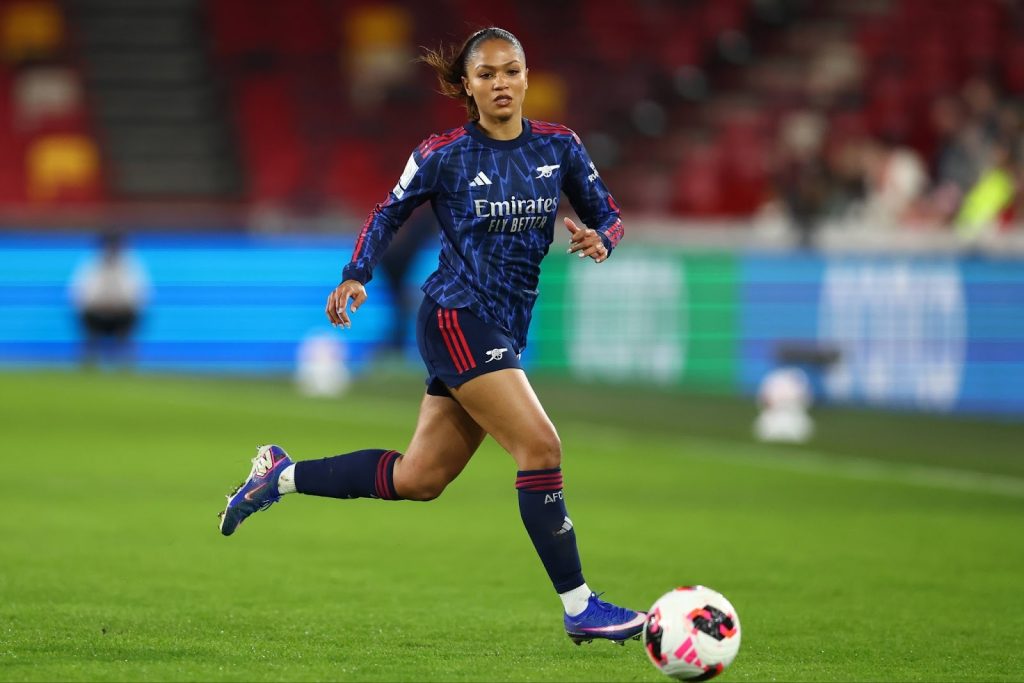
Right Back – Taylor Hinds (Arsenal WFC)
Hinds has slotted in perfectly to Arsenal WFC’s robust defensive set up, after making the switch from Liverpool in Summer 2025 where she played as vice-captain. Already closing in on 20 appearances just over halfway through her first season with the European champions, her flexibility in defensive positions makes her a strong candidate for any starting 11, including internationally for England where she recently received her first senior call up. Hinds came on in the 60th minute against ASFAR and worked hard to ensure the African champions continued to have minimal time in attacking positions.
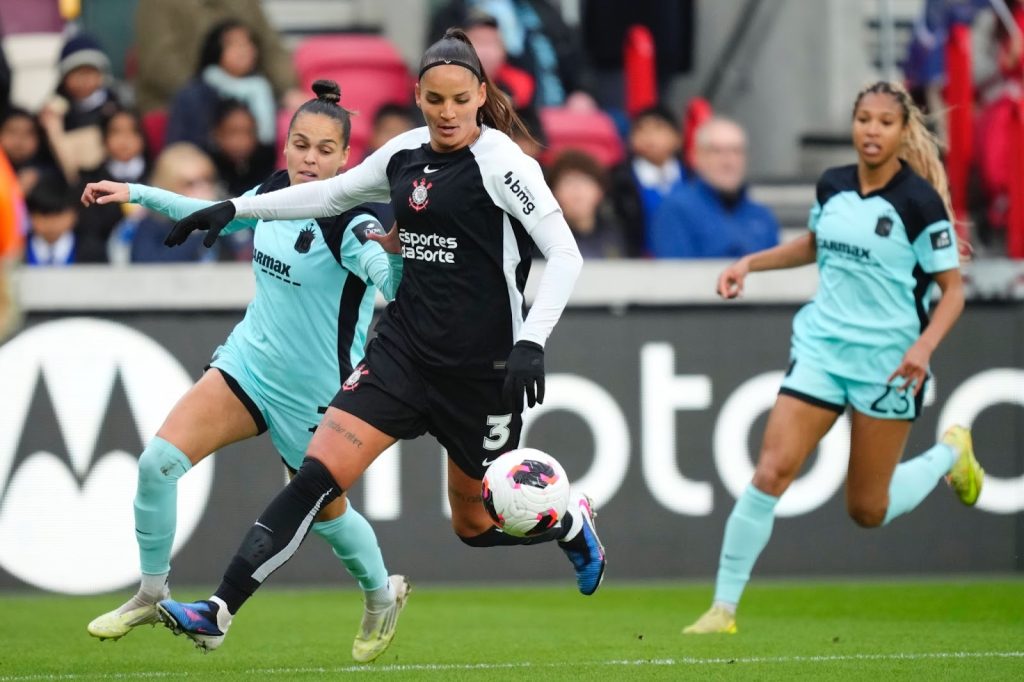
Centre Back – Letícia Teles (SC Corinthians)
Despite not playing a competitive club fixture in 4 months, the CONMEBOL Libertadores Femenina winners held a fortress at the backline and refused to gift Gotham FC any real opportunity to score their highly anticipated – and almost expected- goals in Wednesday’s semi-final. Teles found herself in the coveted starting position at centre back due to squad injuries and excelled in the opportunity to show exactly why she deserves a regular starting spot, with an impressive level of intensity and focus throughout the 90 minutes.
Centre Back– Thías Ferreira(SC Corinthians)
The second half of the dynamic centre back partnership came in the form of Thías Ferreira, who maintained an imposing back line display and executed the crucial responsibilities of defensive blocks and aerial dominance, particularly against the formidable Rose Lavelle. With the 29-year-old having played in her home country for most of her career, her sturdy presence on the pitch and technical prowess makes for a brick wall at the backline. Ferreira is a player that will be pushing for the chance to showcase her right to earn a starting callup when Brazil hosts the 2027 FIFA Women’s World Cup.
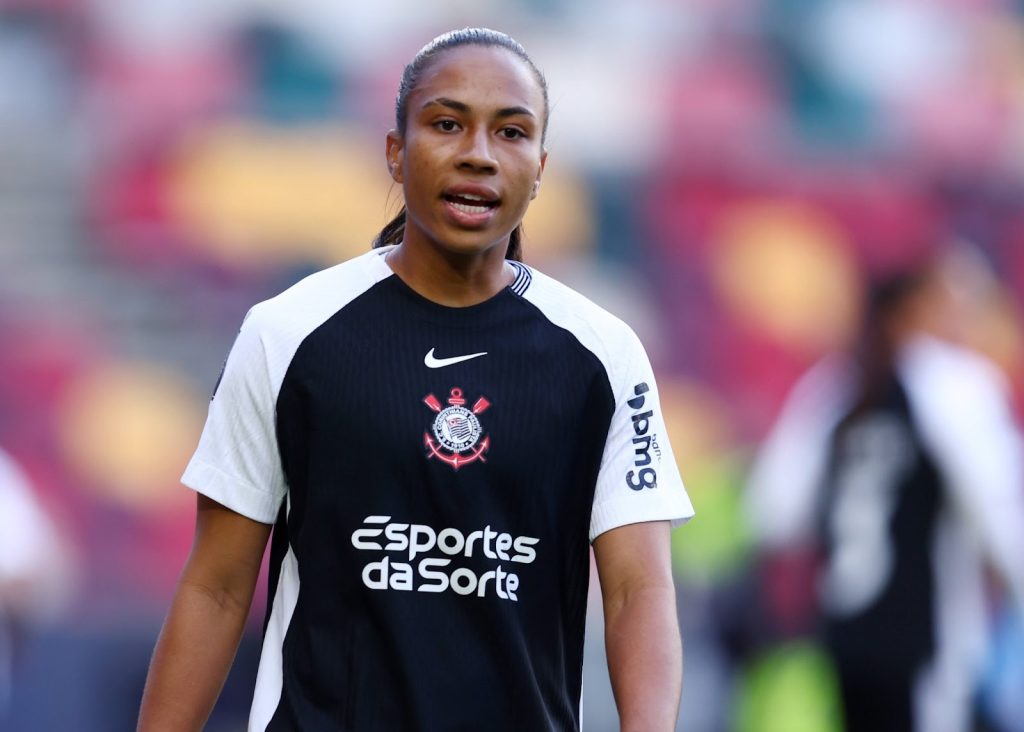
Left Back –Tamires Cássia Dias de Britto (SC Corinthians)
Having earned over 150 caps for club and similar figures for the country, the hardy Brazilian left back has been a vital part of SC Corinthians’ set up since 2019 and is a key figure in a starting lineup. Despite her predominantly defensive role on the pitch, Tamires has netted plenty of goals for her team and offered the all-important semi-final assist, proving herself to be a versatile left back who can attack high into the opposition’s box. After her team’s monumental win, she expressed “this was a long-standing dream… to prove once again how much we deserve to be a reference in this entire world”.
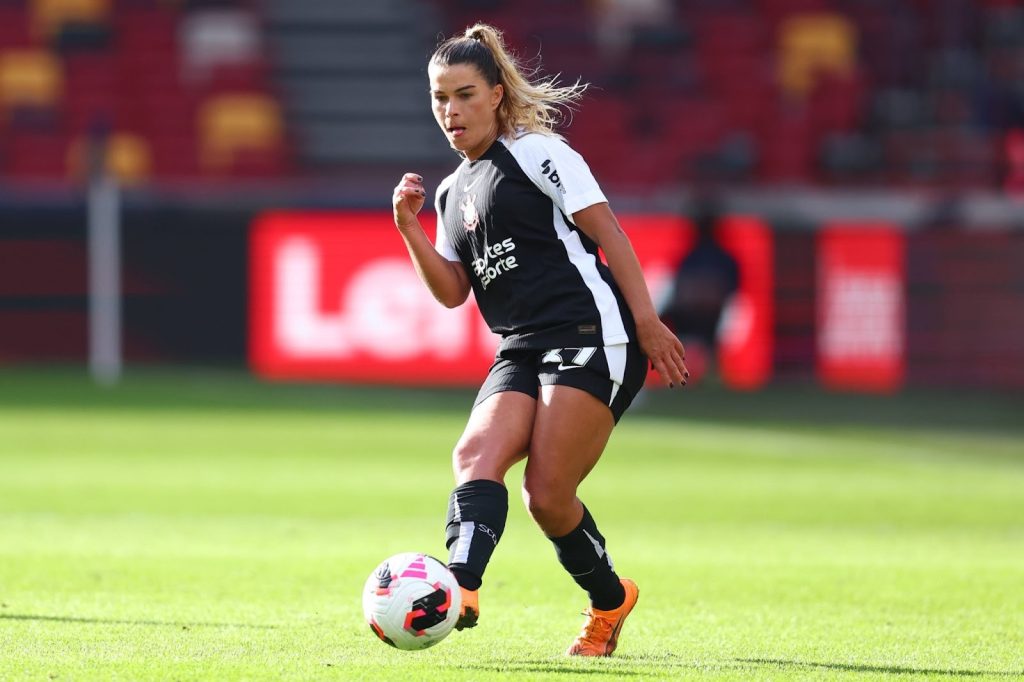
Midfield – Mariona Caldentey (Arsenal WFC)
The Spanish sensation is arguably one of Arsenal WFC’s brightest talents and is a much sought after addition to any midfield setup. With her consistent attacking expertise and composure in high pressure moments, Caldentey shows time again exactly why she was ranked 2nd in the 2025 Women’s Ballon d’Or. An exceptional first season at the London side after a decade in Barcelona saw her score 19 goals with 10 assists and was awarded WSL Player of the Season for 2024/25. It was no surprise to see her name on the semi-final scoresheet, as she calmly slotted home a first-half penalty to bring her side plenty of goal magic.
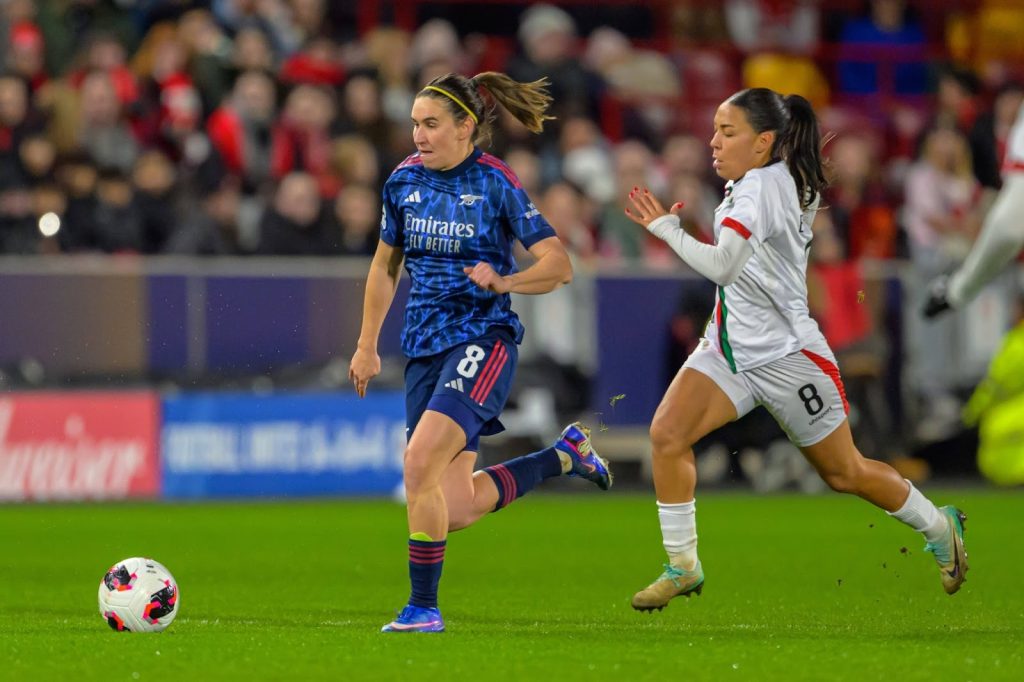
Midfield – Frida Maanum (Arsenal WFC)
A superb finish from Maanum in the 11th minute of Arsenal WFC’s semi-final seen them assert early dominance on the African champions which remained the storyline for the entirety of the fixture. Since joining Arsenal WFC, Maanum has become easily recognised for her ability to press deep on the opposition and score bangers, and she displays a level of commitment, drive and consistent product that makes her a crucial component within a starting lineup. The central attacking midfielder comes to life in the attacking third and her pace is sure to test even the most resilient of opposition players.
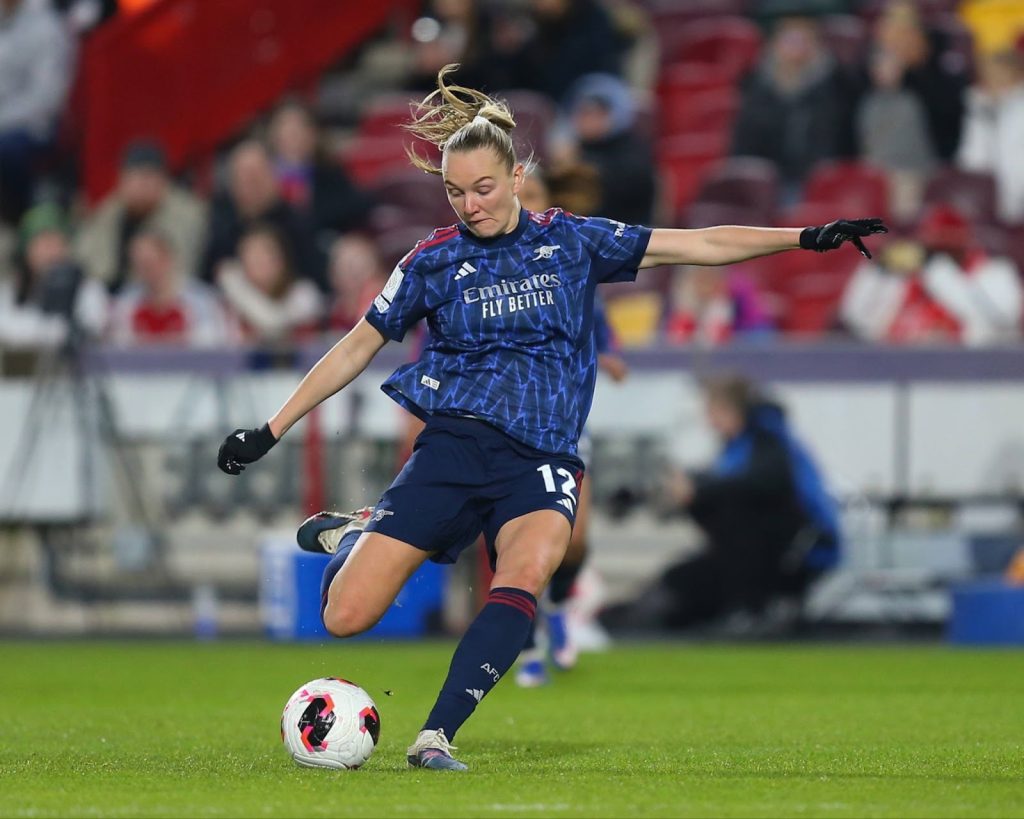
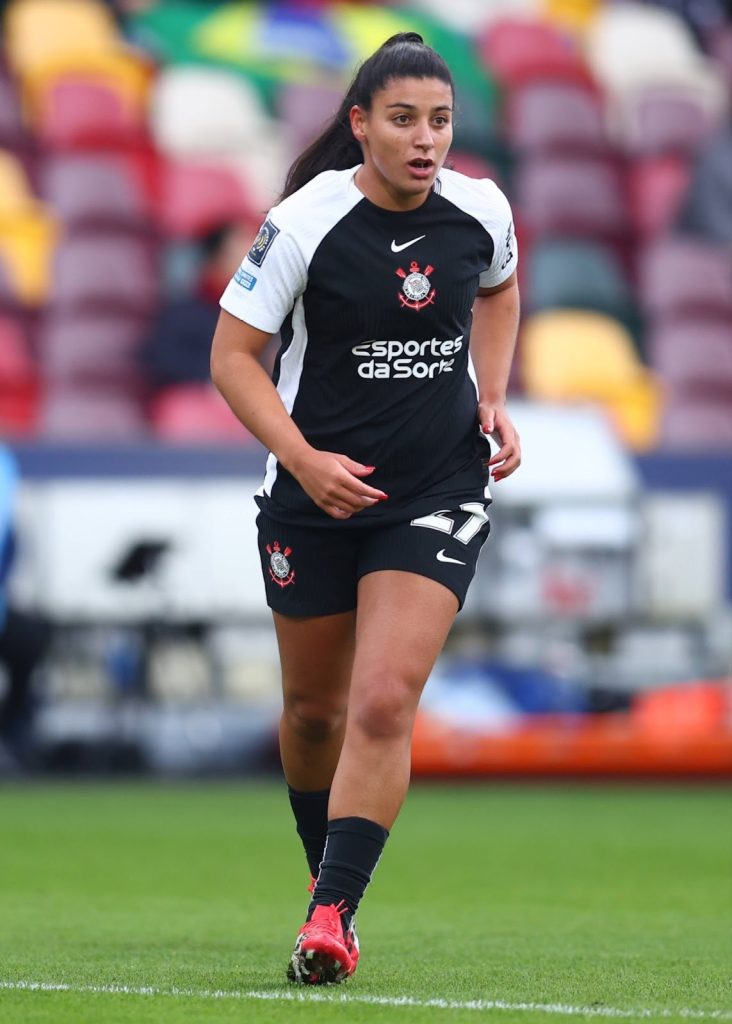
Midfield – Duda Sampaio (SC Corinthians)
Duda is a solid starter, bagging close to 80 appearances for her club since joining in 2023. Despite Gotham controlling possession for long periods of play, SC Corinthians’ heavy-duty midfield allowed them to obtain more clear-cut chances throughout the semi-final and eventually find the back of the net in the 83rd minute. The trademark flair of Brazilian football shines through Duda, and her style of play on the field allows her to create magic in her linkups with teammates in attack and can confidently grab a couple of goals herself.
Forward – Stina Blackstenius (Arsenal WFC)
Arsenal have a host of big names fighting for the green light in starting lineups, one of which being the esteemed Swedish striker who frequently finds herself on the scoresheet. An intelligent and ruthless forward, Blackstenius is a vital leader in attack and has on many occasions gifted crucial goals for her club and country, perhaps most notably the single goal in the 2024/25 UEFA Champions League final that delivered Arsenal their glory. She opened the goal scoring tally in the opening minutes of their FIFA Women’s Champions Cup™ semi-final and will undoubtedly be hungry to find the back of the net again in the final.

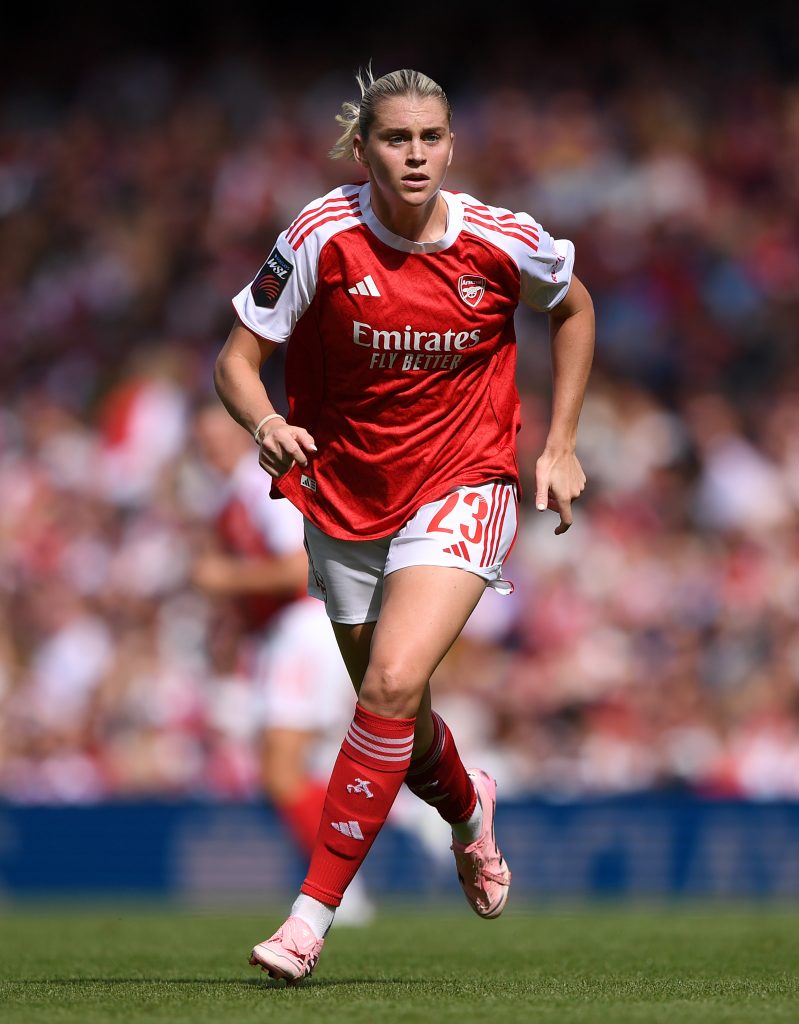
Forward – Alessia Russo (Arsenal WFC)
England’s number 9 has cemented herself as such an integral part of Arsenal WFC’s squad that it is hard to remember she has only been there since 2023. Last season she was joint winner of the WSL Golden Boot Award and enjoyed an abundant summer of football achieving both UEFA Women’s Champions League success with her club and back-to-back Euro titles with England, which seen her selected as 3rd place in the 2025 Ballon d’Or awards. Despite only coming on as a second half substitute in the semi-final, Russo found the back of the net twice, emphasising just how much of an instant impact she can make.
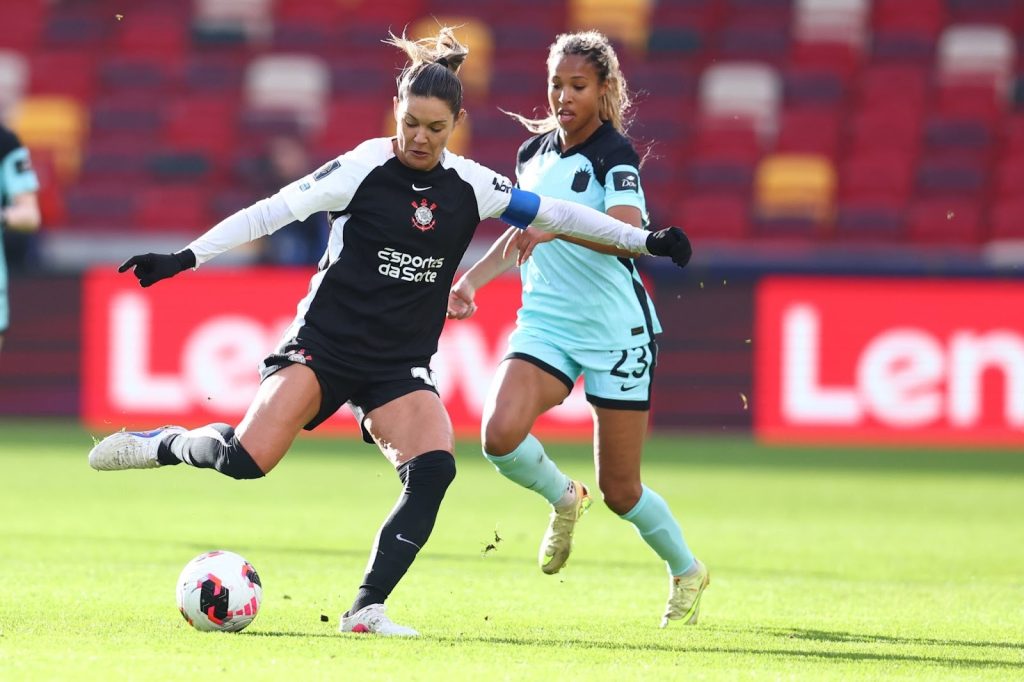
Forward – Gabi Zanotti (SC Corinthians)
Star girl for her beloved Corinthians, it was destined to be that captain Zanotti would be the single decisive factor that booked the South American side a surprise place in the inaugural FIFA Women’s Champions Cup™ final. The nearly 41-year-old rattled NWSL goalkeeping giant Ann-Katrin Berger by slotting home a beautifully placed low strike on goal in the 83rd minute, which would prove to be the only goal of the game. Having been at the club since 2018, the Brazilian maestro has been hailed a hero by fans and her semi-final performance is a wonderful reminder that age is simply a number, and success knows no bounds on the biggest of stages.
All roads now lead to the Final. On Sunday 1 February, Arsenal Stadium sets the stage for a historic finale as CONMEBOL Libertadores Femenina champions SC Corinthians go head-to-head with UEFA Women’s Champions League holders Arsenal Women FC. Kick-off is set for 6pm GMT (3pm BRT), with the first-ever FIFA Women’s Champions Cup™ title on the line following the third-place play-off earlier in the day.
🎟️ Tickets are still available HERE – don’t miss your chance to witness history at the FIFA Women’s Champions Cup™.
The first EVER FIFA Women’s Champions Cup™ signals a new era for women’s club football.
For the first time, champion clubs from every continent will compete on a truly global stage not in theory, but head-to-head to crown the world’s leading women’s club team.
For the players, it’s history in the making. For fans, it’s validation, pride and representation – all at once.
WHAT IS THE FIFA WOMEN’S CHAMPIONS CUP™?
First announced in 2025, the FIFA Women’s Champions Cup™ brings together champion clubs from all six continental confederations in a knockout tournament, consisting of two semi-finals, a third place play-off and the final, being held between 28th Jan and 1st Feb 2026.
More than a new trophy, it’s a long-awaited global platform bringing together clubs from Africa, South America, Oceania Asia and Europe.
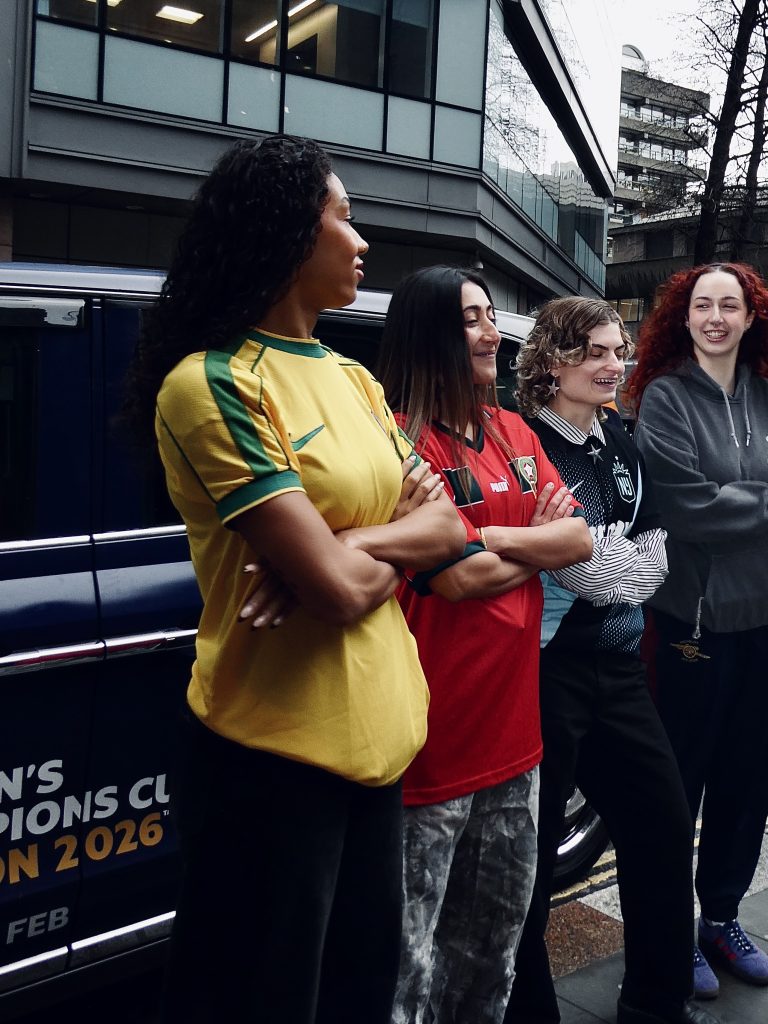
“THIS IS WHAT IT MEANS”
Ahead of the tournament, we took fans from Arsenal (UK), SC Corinthians (Brazil), ASFAR (Morocco) and NJ/NY Gotham FC (USA) around London in one of the FIFA Women’s Champions Cup™ Cabs, speaking to them about what it means to see their club on this stage and what they’d want the players to know before kick-off.
ELLA, ARSENAL FAN
“As this is the first time we’ve had this competition, it’s such an honour to be part of it, and I know the players feel that too. We’re incredibly proud of them. The club has come such a long way over the last few seasons, so to see them reach this point means a lot. If they could hear me right now, I’d say you’ve got this – keep pushing and let’s get to that Final and win!”
SARA, ASFAR FAN
“Seeing ASFAR go this far in the FIFA Women’s Champions Cup™ is incredible. The representation alone means so much, and the fact that the majority of the squad is Moroccan makes me incredibly proud. Big up all the girls at ASFAR – they have so much quality and greatness. There’s a reason so many of them have been voted among the best players in Africa, and I can’t wait for the rest of the world to see their talent too.”
KIRA, SC CORINTHIANS FAN
“I know they will make us proud. It’s incredible to see them competing on the international stage and representing the club. Seeing so many fans already in London, even waiting at the airport for the team – that’s what this club is about. Come on Corinthians!”
MIREILLE, GOTHAM FC FAN
“It’s really cool seeing Gotham in London, and I’m super excited to watch them on the global stage. It’s so exciting to see top clubs from different continents going up against us. If I could send a message to the players right now, I’d say good luck and make sure you make America proud.”
The action gets underway in West London on Wednesday, 28 January, with both Semi-Finals taking place at the Brentford Stadium in Brentford.
First up, Concacaf champions Gotham FC face CONMEBOL champions SC Corinthians at 12:30 GMT, before UEFA Women’s Champions League holders Arsenal Women FC take on CAF champions ASFAR at 18:00 GMT later that evening.
On Sunday, 1 February, the tournament reaches its climax at the Arsenal Stadium, where the first-ever FIFA Women’s Champions Cup™ winner will be crowned – following the third-place play-off and the final showdown.
🎟️ Tickets are on sale now – secure yours and be part of history at the FIFA Women’s Champions Cup™ HERE.
The WSL is back and the FA Cup is underway too this weekend!
Here’s some of our favourite moments, so you can stay to up to date with the action!
Thornaby FC: From Axe to achievement
Thornaby FC, a club which announced in June that it had voted to drop its female teams following a “difficult year” reached the first round of the FA Cup for the first time.
Thankfully the decision was reversed following uproar on social media, with a new board voted in to ensure better decision making at the top.

Just five months later, the women’s team took on Liverpool Feds, who are three divisions above. They lost the game 7-2 but what a huge achievement for a club on the brink of collapse over summer.
Manchester United milestones
It was a big weekend for Manchester United, facing Arsenal after the international break. United, who managed to keep their unbeaten run this season, finished the game 1-1 after a last-minute goal from Melvine Malard cancelled out Alessia Russo’s 63rd minute strike.
But it was a historic game for two other reasons. United manager Marc Skinner celebrated his 100th game in charge of the Red Devils and records a 62.6% win percentage.

Going 50 better, Millie Turner celebrated her 150th appearance for the club and picked up a Barclays Player of the Match award to top off the day!

Leah faces a tough part of her history
Arsenal’s Leah Williamson returned to Manchester United’s home ground, Leigh Sports Village for the first time since tearing her ACL there last season.
No doubt mixed emotions for Williamson who started the game yesterday. It was a beautiful moment to see her come full circle and appreciate how far she’s come since that fateful news just before the Women’s World Cup.

Khiara Keating’s first WSL start
There have been some big questions over the goalkeeper situation at Manchester City this season with new signing, Japan international Ayaka Yamashita being Gareth Taylor’s first choice keeper for all of the WSL fixtures so far.
Despite Yamashita’s impressive credentials, it’s had a lot of us wondering why Taylor had chosen to change things up when Khiara had secured the WSL Golden Glove and obtained her first England call-up last season.

But, Keating finally got her first league start of the season AND kept a clean sheet too!
Bompastor’s reign continues
Chelsea boss Sonia Bompastor joined an elite team of managers last night as her side defeated Everton 5-0. The win, which is the 5th win on the bounce, means Bompastor joins one of only three managers to win five games at the start of the season in a row.
Only former Arsenal manager Jonas Eidevall and former Birmingham City manager David Parker share this accolade.
There were a few concerns when Emma Hayes’ era came to an end but Bompastor has put all those concerns to bed.
Introducing our new series: Fandom.Is.Everyone x Arsenal Edition.
We wanted to capture the beautiful and very real essence of women’s football fandom.
It’s young and experienced. It’s scarves , beanies and concourse catwalks. It’s pints, Jamaican patties and burger vans.
It’s community, safety and acceptance. It’s family, friends and solo-adventurists. It’s all the cultures, languages and identities in one house.
It’s all abilities and taking care of one another. It’s new and old friends.
It’s heartbreak and heart-felt joy. It’s stadium games and new chants. It’s long journeys and local clubs. It’s banners and cardboard signs.
It’s fierce rivalry and supporting both. It’s advocacy, campaigns and finally celebrating the winds of change.
It’s football fandom. It’s you.
Check out our beautiful collection below.


For many people, makeup can form a key part of their identity. That appears to be no less the case in women’s football where roughly a third of people wear makeup to play.
We surveyed over 1,500 audience members (women, men and non-binary people) and found that 14% of those playing football always wear makeup, while a further 18% sometimes do.
Makeup, and more importantly self-expression, has become a visible aspect of women’s football culture. Whether it is 28-year-old Lioness Katie Zelem’s iconic eyelashes or the copious number of Il Makiage x Arsenal tote bags to be spotted around London.

For the players who do wear it, makeup can often be a confidence boost that helps them express their identity through football as much as they express their identity through their mascara application.
In fact, 54% agree with the statement, “wearing makeup makes me feel confident and fierce, both on and off the pitch.”
In the same way some players might pull on a pair of lucky gloves or socks to take to the pitch, makeup can be a form of armour for others as they prepare to represent their team to give a further confidence boost on the field.
That breaks down to reflect that 52% of respondents quoted “look good, feel good, play good” while a further 35% said confidence was a factor in wearing makeup. The remaining 13% indicated they are already wearing it after work or school before heading straight to training.
While it may seem a trivial issue to some, players can often end up receiving hate or feeling diminished for their seemingly insignificant act of self-expression.
England cricketer Sarah Glenn said in a TikTok on International Women’s Day: “The amount of men who are triggered for women being themselves in sport is beyond me.
“Girls will simply put on false lashes in their sport and men are commenting, ‘Why are you wearing that? You should be focusing on the game. Blah, blah, blah.’”
In women’s football, Juventus’ Alisha Lehmann has received abuse for taking to the pitch in makeup. Often this comes with accusations of wanting attention or detracting from her focus on the sport.
For a footballer with over 50 international caps and over 100 WSL appearances at the age of 25, the comments represent a remaining misogyny as the appearance of women playing sport continues to be policed.
It is important, then, that women, and anyone else competing in sport, feel confident to dress and express themselves in whatever way makes them feel good without receiving abuse about their decision.
Yet what also stands out from the research is that 68% of people do not wear makeup to play football compared to only 46% who do not wear it in everyday life.
Given that many of the factors cited for players choosing to wear makeup referenced confidence, this would indicate that, away from online abuse, women’s football promotes an environment where people can feel confident however they choose to dress and present.
Of course, there can be other factors such as comfort and a tendency to sweat that lead to fewer people opting to wear makeup while playing as a practicality.
However, wearing makeup can still represent a societal beauty standard that many feel the need to live up to.
So, the fact that over two-thirds of players do not feel the need to conform to this standard while at football training or matches indicates that women’s football can act as a liberating environment away from the conventions of everyday life.
Within such an inclusive environment it remains just as important to include those who opt to wear makeup as a form of self-expression as those who choose not to.
Hopefully, however, women’s football can provide a space to break free of the shackles of society’s arbitrary beauty standards and one day, wearing makeup will no longer have to be linked to confidence at all.
The WSL kicked off last weekend, so we picked our top young ballers to watch this season
Choosing just seven up and coming ballers in a season which is inundated with young talent was tough, but we had to start somewhere…
In no particular order, we wanted to profile the under 25’s continuing to create magic and reassure us that the future of the game is in very safe hands.
Michelle Agyemang (Brighton (Arsenal loanee) & Eng U19’s)

Age: 18
Position: Forward
Ahead of the 2023-24 campaign Agyemang joined Women’s Championship side Watford FC on a dual-signing in September 2023. This experience proved the making of her, bagging six goals for the club – with one coming against her parent club in an FA Club tie. That’s one way to show Mum & Dad.
She’s won two Championship Player of the Week and one Championship Player of the Month awards during her short time at the club. These performances earned Agyemang her first professional contract with the Gunners and they’ve just sent her on loan to Brighton & Hove Albion to gain WSL minutes.
And she found a couple…being subbed on in the 88th minute against Everton in the weekend. We have no doubt she’ll be making earlier starts shortly.
Agyemang would have had tough competition at Arsenal with so many attacking options available: Mariona Caldentey, Alessia Russo, Stina Blackstenious, Beth Mead, Rosa Kafaji and Caitlin Foord to name a few, but manager Jonas Eidevall will be keeping a watchful eye on her from afar.
Having bossed the Championship, this Young Gun(ner) has a huge opportunity ahead to build, develop and maybe twinkle the eye of England boss Sarina Wiegman as we head towards the Euros next year…
Grace Clinton (Manchester United & Eng Seniors)

Age: 21
Position: Midfield
Last season, Clinton went on loan to WSL’s team-on-the-rise, Tottenham Hotspur, making 20 appearances, scoring four goals and bagging four assists for the North London side. She was a key figure in the club reaching their first FA Cup final at Wembley, despite not being able to play in the final (due to being conflicted)
On the international stage, Clinton made her England debut in February against Austria (and scored of course) and to top off a stellar season, this young baller just picked up the PFA’s Young Player of the Year Award.
Ahead of this season, despite Spurs boss Robert Vilahamn singing her praises (and wanting to keep her), Clinton returned to parent club Manchester United whom she is expected to play a key role for this season. Vilahamn gave Clinton more freedom to express herself on the wing but as her experience has grown, so has her presence in the No.10 or No.8 role. She admitted that she is “quite an aggressive player” and the middle of the pitch is where she can “do most harm”. Bring on the damage.
With a current transfer market value of £101k (credit: SoccerDonna) and already on the score sheet for United last weekend, she is certainly a talent on the rise, and one to keep an eye on this year.
Missy Bo Kearns (Aston Villa & Eng U23’s)

Age: 23
Position: Midfield
Having been with Liverpool since she was eight, this young scouser was the embodiment of a ‘Reds’ fan – so it was a surprise to see her move to Villa this summer.
But despite Missy Bo’s history with Liverpool saturated with achievements – the youngest player to ever captain the side in 2021-22, Standard Chartered Women’s Player of the Season 2021, Women’s Football Awards Young Player of the Year 2023, Club Player of the Season 2023, Northwest Football Women’s Rising Star Award 2023 AND the 2024 PFA Community Champions Award – the decision was made to move on.
After receiving her first call-up to the Lionesses in May, hoping to earn an England senior debut asap and a place at the 2025 Women’s Euros on the line, Missy Bo is looking for more game time and a chance to impress Sarina this year.
Making her first WSL start with Villa last weekend, she impressed against Chelsea, causing them problems and nearly securing an early opener against the current WSL title holders. Her link-up play with Chastity Grant is going to be an asset for The Villains.
Missy Bo has credentials both on and off the pitch and Villa have snapped up a baller with big ambitions, an eye on Switzerland and a genuine love for the game and its community. Whatever the transfer fee – it’s a bargain.
Aoba Fujino (Manchester City & Japan Seniors)

Age: 20
Position: Forward
What a summer signing for City! Fujino joins from Tokyo-side Verdy Beleza after racking up 24 goals and 17 assists during her 51 appearances for the club. That’s one way to catch manager Gareth Taylor’s eye as he looks to bolster his front line. Was having Miedema, Kelly, Hemp and Shaw not enough?
You might recognise Fujino’s name from the 2023 Women’s World Cup. Yep, she made history by becoming Japan’s youngest ever goalscorer (aged 19 and 180 days), scoring in their group game against Costa Rica.
And her presence on the international stage reigns supreme – Fujino was the talk of Paris this summer after her incredible free-kick against Spain in Japan’s opening Olympics game.
Her three-year deal with City will no doubt start with an adjustment to WSL life, but that won’t take long – she eats up high-pressure situations and has already given us a very big glimmer of things to come. She started for City this weekend and caused trouble for 74 minutes before Chloe Kelly joined the action.
Olivia Smith (Liverpool & Canada Seniors)

Age: 20
Position: Midfield
Last year Smith played for Portuguese side Sporting Lisbon in the Campeonato Nacional Feminino, recording an impressive 13 goals and nine assists in just 18 games. It’s no wonder that Smith attracted interest from Europe’s biggest clubs.
Liverpool eventually sealed the deal for a club record fee of almost €250,000 (£210k). After finishing 4th last season, Liverpool will be aiming to secure Champions League football this season and with a few big names leaving (Melissa Lawley, Shanice van de Sanden, Emma Koivisto and Miri Taylor), Smith is expected to bring the fire power.
On the international stage, Smith is no wallflower, having made her Canada Women’s National Team debut at just 15 (in 2019). She was unfortunate not to be selected for the 2024 Paris Olympics squad but she’ll be working towards building a few excellent WSL seasons to secure her spot for the 2027 Women’s World Cup in Brazil.
Smith started for Liverpool at the weekend and looked impressive…
Naomi Layzell (Manchester City & Eng U23’s)

Age: 20
Position: Centre-back
Layzell signed with City this summer from just-relegated side Bristol City who joined the Women’s Championship this season. Despite the club’s downfall, Layzell is on an upward trajectory, securing Young Player of the Season last year.
The transfer fee was undisclosed but the Robins swept it up, confirming that they received a club record sum for this young fledgling fleeing the nest.
The Citizens have secured Layzell on a four-year contract. City’s firepower is world-class but Layzell comes in to lay bricks for that City back-line. The club conceded the fewest WSL goals last season (15) than any other team and they will want to keep it that way.
It’s a big job for Layzell but she brings with her a wealth of experience with Bristol City – a team which came under wave after wave of attack last season. There’s a reason she’s been signed for four years and she’ll be hoping to get City that all-elusive recent WSL title (last won in 2016) and ensure a decent run in the Champions League.
Despite not getting any minutes at the weekend, we’re excited to see her first WSL minutes with the club.
Ruby Mace (Leicester City & Eng U23’s)

Age: 20
Position: Midfield
Mace has already played for a number of English giants, having previously balled with Manchester City, Birmingham City and Arsenal.
This summer, Leicester City made her loan spell from Manchester City permanent, signing a two-year contract with the Foxes. She made 11 appearances for the club last season and was quick to be offered a return by new manager Amandine Miquel.
Speaking ahead of this season, Mace confirmed that ‘minutes were important at this stage of her career’ and that Leicester had that family-feel she needed to really elevate her career at a pivotal moment.
Mace started for Leicester at the weekend, helping secure a very vital point for the club’s campaign this season.
It’s been a BIG summer of global football – Euro’s qualification, some incredible WSL x Aus x NWSL collabs and the 2024 Paris Olympics. Now we’re moments away from the first stages of the UEFA Women’s Champions League first stages and the start of the WSL on 20th September…
It’s set to be the most well-attended WSL campaign in history with big ambitions to beat the 717,721 people who turned up for clubs last season.
So, whilst we have a brief moment, let’s get organised and figure out where we need to be and when to catch a bit of the main stadium action…
Arsenal: The Emirates

It’s always a vibe at the Emirates and it’s pretty much always a sell-out. Last season, Arsenal secured back-to-back sellouts and made history by encouraging 60,160 fans to their 1-0 win against Manchester United (Feb 2024). The Gunners average league attendance was an 31,428.
If that wasn’t incredible enough, Arsenal now hold the top three highest attended WSL games in history: 59,042 (Arsenal v Chelsea in Dec 2023) and 54,115 (Arsenal v Liverpool in October 2023).
This season, they’ve promised us 11 games at the Emirates; eight WSL and three more depending on UEFA Women’s Champions League progression. Meadow Park (4,500 capacity) will only host three home games against Crystal Palace, Leicester City and West Ham.
- Manchester City: 22 September
- Everton: 06 October
- Chelsea: 12 October
- Brighton: 10 November
- Aston Villa: 08 December
- Spurs: 16 February
- Liverpool: 23 March
- Manchester United: 11 May
Aston Villa: Villa Park

In a historic move for the women’s side, Villa announced this summer that Villa Park will now host all of their WSL home games; a significant increase compared to the five played there during the last campaign.
The remaining home fixtures, including the Adobe Women’s FA Cup and FA Women’s Continental Tyres League Cup ties, will be played at Walsall’s Poundland Bescot Stadium.
- Tottenham: 29 September
- Leicester: 13 October
- Liverpool: 3 November
- Crystal Palace: 17 November
- West Ham: 15 December
- Manchester City: 26 January
- Chelsea: 2 February
- Everton: 2 March
- Manchester United: 23 March
- Arsenal: 27 April
- Brighton: 11 May
Brighton: American Express Stadium

No main stadium fixtures announced yet. All the women’s games will take place at the Broadfield Stadium.
Chelsea: Stamford Bridge

Chelsea will play three home games at Stamford Bridge. The rest of their fixtures will be hosted at the much-loved Kingsmeadow. Despite having a capacity of only 4,850, it’s the perfect place to still get that up close and personal feel, sitting meters away from Lauren James and new manager Sonia Bompastor.
Last season, the UWCL semi-final second-leg against Barcelona was played in front of a sellout crowd (39,398) at the Bridge. The Blues will be looking to beat that this year and we expect more UWCL fixtures to be announced depending on how the club get on in Europe.
- Manchester City: 17 November
- Arsenal: 26 January
- Liverpool: 11 May
Crystal Palace: Selhurst Park

The Eagles have landed in the WSL for the first time in the club’s history and they have quite the list of top tier fixtures to show case at Selhurst Park.
Last season, they made club history by selling over 5,566 tickets to watch them lift the Women’s Championship trophy. This year, with fixtures like this, we have no doubt another record will be smashed.
- Chelsea: 27 September
- Manchester City: 03 November
- Arsenal: 30 March
Everton: Goodison Park

Only one fixture has been announced at Goodison Park and what a fixture it is – just the Mersyside Derby – one of the most fiercely competitive red and blue fixtures in the WSL.
- Liverpool: 16 November
Leicester: King Power Stadium

These guys are main stadium OG’s. The women’s side have used the King Power Stadium as their home ground since 2021. This season is no different – all 11 WSL home games will feature here. We love to see it.
- Arsenal: 29 September
- Crystal Palace: 6 October
- Everton: 20 October
- Manchester United: 17 November
- Chelsea: 15 December
- Liverpool: 26 January
- Aston Villa: 16 February
- Brighton: 23 March
- Tottenham (30 March)
- Manchester City (27 April)
- West Ham (11 May)
Liverpool: Anfield

Three fixtures will be played at Anfield this season. But fans will have double the fun this year as the club confirmed they’d signed a ten-year lease to relocate from Prenton Park to the 18,000-capacity Totally Wicked Stadium in St Helens.
- Manchester City: 13 October
- Manchester United: 16 March
- Everton: 4 May
Manchester City

City will host three WSL games at the Etihad Stadium. Their remaining fixtures will be played at the 7,000-capacity Joie Stadium across the road which sits within City’s elite training ground facility.
- Tottenham Hotspur: 10 November
- Manchester United: 19 January
- Chelsea: 23 March
Manchester United

Yaaanited have three fixtures in the diary for Old Trafford with the remaining games being played at Leigh Sports Village. There have been rumours recently of the women’s side moving permanently to a re-developed OT in the future, with their men’s team re-homing to a new nearby stadium but we’ll wait to see if there’s any legs in this…
In the meantime, United have sensibly chosen two mid/low-table fixtures against the Hammers and Palace, where they’ll be expecting to secure wins but they couldn’t miss the Manchester derby now and with City burned by a near-miss with the title, that last fixture will be spicy as hell.
- West Ham: 21 September
- Crystal Palace: 16 February
- Manchester City: 04 May
Spurs: Tottenham Hotspur Stadium

It’s an important season for the club. A million miles away from once being seen as the WSL newbies (entering the league in 2020), they’re strong mid-table warriors with an eye on top four and a love for disruption.
They finished last year strong with a history-making FA Cup run which took them to Wembley in May (defeated 4-0 by Manchester United).
They’re not messing around with the main stadium fixtures this year – just the three biggest and the best opposition to showcase how far they’ve come, with all their remaining games to played at Brisbane Road (capacity of 9,721).
- Arsenal: 17 November
- Manchester United: 2 February
- Chelsea: 4 May
West Ham: London Stadium

No main stadium fixtures have been announced yet. All the women’s games will take place at the Chigwell Construction Stadium.
Amid increasing concerns over the safety and sustainability of crowd interactions at women’s football, Chelsea announced their players will no longer engage in post-match selfies and autographs at their home ground (Kingsmeadow).
While women’s football has traditionally offered a strong connection between fans and players, the growth of crowds has led to concerns over the practicality of such close interaction – with reports of some fans being injured by others as they attempt to interact with players at the end of games.
The problem has already reared its head in pre-season as swathes of Arsenal fans were seen filling the walkway before the end of their friendly match with Southampton at St. Mary’s Stadium.

It is a sight that has become increasingly familiar in stadiums hosting women’s football across the UK and beyond in recent years.
Chelsea cited safety issues stating: “There were occasions last season that led to concerns about the safety and security of both supporters and players, largely due to the rising numbers who are seeking signatures and selfies before and after games.”
The club have instead said they will hold events specifically organised for fan meet and greets with players.
It is a problem the whole of the WSL is grappling with as Manchester City have opted to introduce an ‘Autograph Alley’ post-match where ‘randomly selected fans’ are granted access to player selfies and autographs.
It might not have been what Women’s Professional Leagues’ CEO Nikki Doucet envisaged when referencing a drive towards engaging a ‘Taylor Swift demographic of fans’, but perhaps a selfie with City strikers Lauren Hemp or Bunny Shaw will become the new ‘22 hat’.
Meanwhile, fellow WSL big-hitters Arsenal and Manchester United have opted not to introduce restrictions. However, both will predominantly play at better-equipped stadiums for fan-distancing in the Emirates and Leigh Sports Village next season.
Neither club will deter fans from rushing to the front, blocking exit routes and the views of spectators behind them, with ‘Can I have your shirt signs?’ and Sharpies at the ready.
It is a trend bringing accusations of entitlement, as the Lionesses experienced after their match against Scotland at the Stadium of Light in September last year. Fans were seen chanting “get off the bus” as the team coach departed the ground.
Cardboard signs expectant of shirts, boots and autographs have become an all too familiar sight in the stands, with players such as former Manchester United goalkeeper Mary Earps known to have spent up to an hour answering requests.
Earps, in fact, has responded to criticism online labelling her “too busy and important” to stop to greet the poster’s daughter. The reality is, with crowd sizes pushing 60,000 in the WSL players do not have the capacity to greet each individual, nor should fans expect it.
Not only does this put an unreasonable expectation on the players, but it also means they cannot proceed with post-match media obligations or the recovery plans required of elite athletes – recovery which feels even more important now given the increasingly demanding match schedules the players contend with.
Criticism can also often be found tinged with misogyny as players are expected to show their gratitude to the fans for supporting them, as though they have not just exerted themselves for 90 minutes for the crowd’s entertainment.
Of course, for many years, smaller attendances did enable personal interactions and fan relationships with players. Such accessibility became a key attraction of the women’s game with new fans pulled in just as much by personality as well as play.
The boom in crowds since the 2022 European Championship means the days of a gaggle of six or seven people standing by the tunnel after a match are long gone.
Now, women’s football must confront the uncomfortable reality that with a change in attendance, there must also be a change in behaviour.
As Chelsea and Manchester City lead the way on restrictions, it could well spark more teams into similar action across the league and abroad.
While no fan should believe in their own preordained right to ‘meet and greet’ their idol, women’s football also prides itself on inclusivity and must be careful not to alienate those fans drawn in by personality.
Change always takes time to adjust to, and clubs will have to balance pleasing fans, new and old, while most importantly protecting the safety of their players.